Types of Greenhouse Covering Materials: Buyer Guide for Garden Retailers and Growers
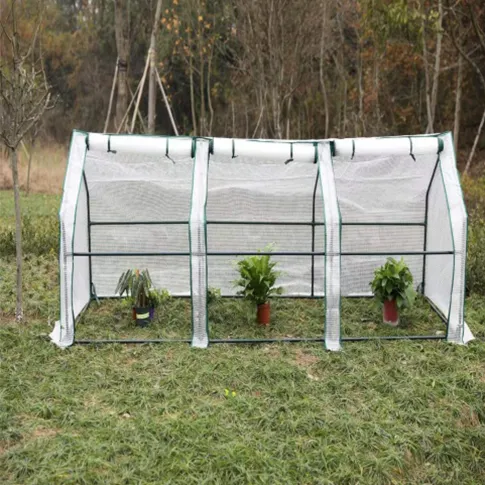
Greenhouse covering materials are transparent or translucent panels, films or mesh covers used to control light, heat, humidity, wind protection and plant-growing conditions inside a greenhouse. The right cover affects plant growth, product durability, shipping cost, retail price and customer satisfaction. For garden retailers, distributors and e-commerce brands, covering material is one of the most important product-positioning decisions. PSO supplies garden greenhouses, polycarbonate greenhouses, PE film greenhouses and tunnel greenhouse for home gardening and hobby growing applications.
What Are Greenhouse Covering Materials?
Greenhouse covering materials are the outer layers that allow sunlight into a growing structure while protecting plants from wind, rain, pests, frost and excessive weather exposure. Common greenhouse covering materials include glass, polycarbonate panels, polyethylene film, PVC film, shade netting and reinforced PE mesh. Each material has a different balance of light transmission, insulation, strength, cost, weight and expected service life.
The RHS school greenhouse guidance on cladding materials also explains that plastic film is usually the cheapest greenhouse cladding option but may last only 3–5 years before ultraviolet degradation makes replacement necessary.
Main Types of Greenhouse Covering Materials
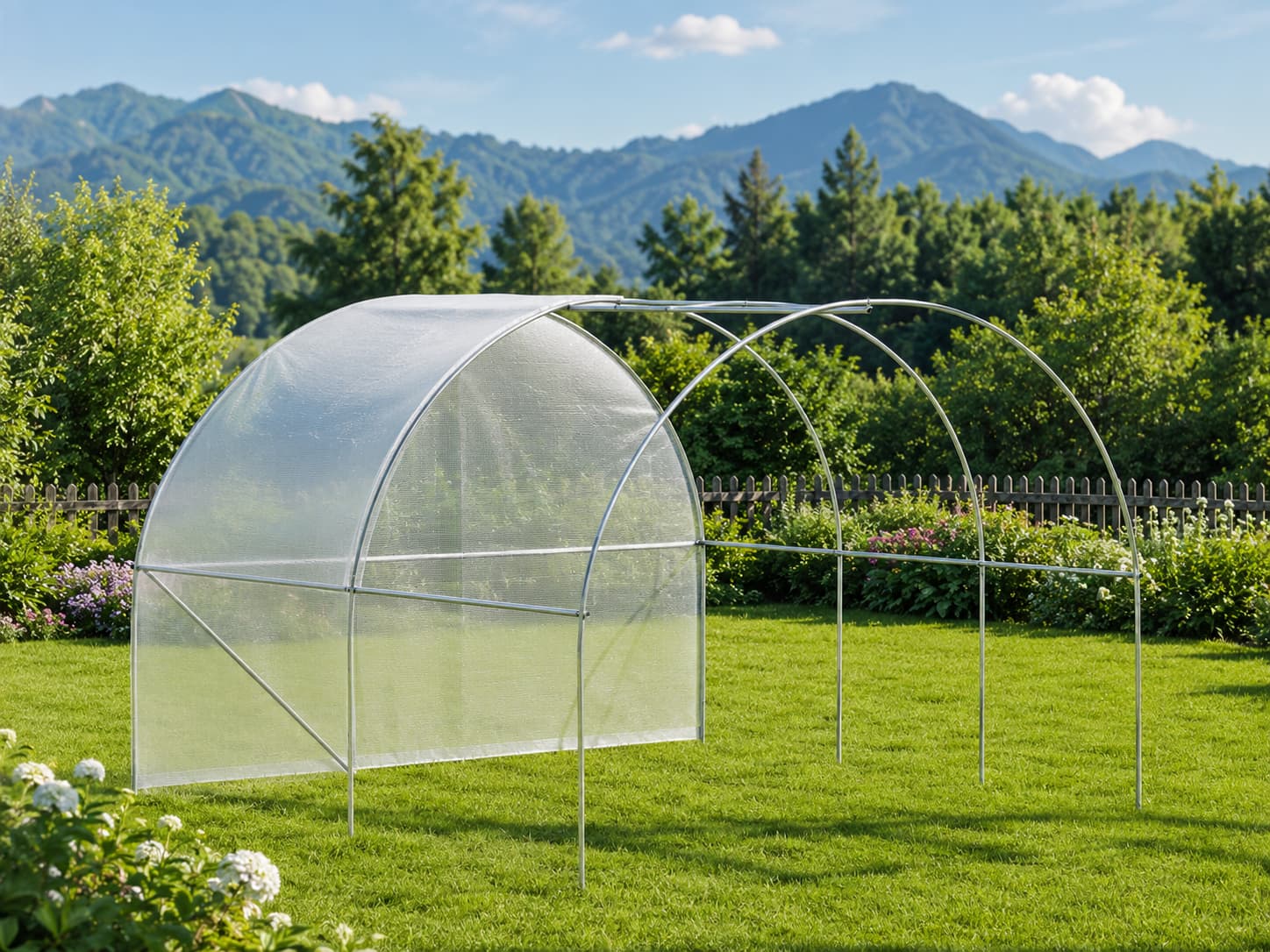
The main greenhouse covering materials are glass, polycarbonate, polyethylene film, PVC film and shade or mesh covers, each suited to different climates, budgets and user expectations.
| Covering Material | Typical Strength | Typical Limitation | Best Use |
|---|---|---|---|
| Glass | High clarity, premium look, long life | Heavy, fragile, higher cost | Permanent backyard or premium greenhouse |
| Polycarbonate Panel | Impact resistant, lightweight, better insulation | Lower light transmission than glass | Hobby greenhouses, windy areas, safer family gardens |
| Polyethylene Film | Low cost, flexible, easy to replace | Shorter service life | Polytunnels, seasonal growing, value product lines |
| PVC Film | Flexible and clear | Can age under UV and cold conditions | Small greenhouse covers and entry-level structures |
| Reinforced PE Mesh | Lightweight, breathable, practical for tunnel structures | Less insulated than rigid panels | Hobby polytunnels and ventilated growing tunnels |
| Shade Netting | Reduces heat and sun stress | Not a full weatherproof cover | Summer protection and greenhouse accessories |
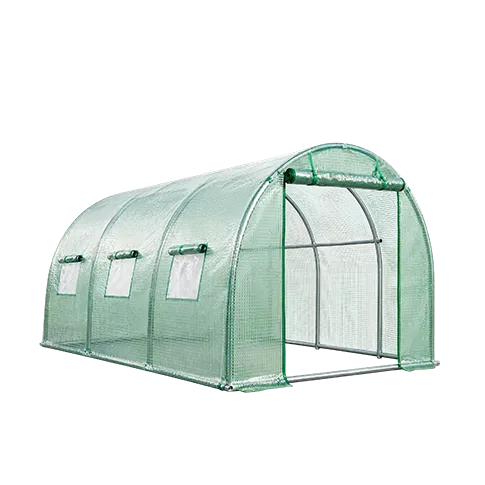
PSO’s featured tunnel greenhouse uses 140–180 gsm UV-protected PE mesh cover, 18–25 mm hot-dipped galvanized steel tubes and listed 80–85% light transmission. This makes it suitable for hobby growers who need ventilation, sun diffusion and practical weather protection without the cost of rigid greenhouse panels.
Glass vs Polycarbonate vs PE Film: Which Is Better?
Glass, polycarbonate and PE film should be compared by light, insulation, durability, safety, shipping cost and customer budget rather than by appearance alone.
Glass is suitable for premium customers who want maximum clarity and a traditional greenhouse look. It is less ideal for low-cost online sales because it is heavy, fragile and more expensive to ship. Polycarbonate is often a balanced choice because it is lighter, safer and more impact resistant than glass. Twin-wall polycarbonate also improves insulation, making it useful for hobby gardeners who want a more durable backyard greenhouse.
PE film is the value option. It is widely used for polytunnels, walk-in greenhouses and seasonal growing structures because it covers a large area at a lower cost. The Virginia Cooperative Extension guide to controlled environment agriculture explains that glass provides strong light transmission and durability but requires more substantial framing, while polyethylene film is inexpensive but relatively short-lived and polycarbonate offers a balance of durability, insulation and cost.
For retailers, the best assortment often includes more than one material: PE film tunnels for entry-level vegetable growers, polycarbonate greenhouses for mid-to-premium customers and Greenhouse Kits & Accessories for add-on sales such as shelves, anchors and replacement covers.
How to Choose Greenhouse Covering Materials for Retail Products
Choosing greenhouse covering materials means matching climate, product price, crop type, packaging channel and after-sales expectations.
For hot climates, ventilation and shade control are important. The RHS greenhouse ventilation and shading guidance warns that both glass and plastic greenhouses can overheat in sunny weather and therefore require adequate airflow and carefully managed shading. For colder regions, insulation and wind resistance matter more, so polycarbonate panels or well-anchored PE film tunnels may perform better than thin, unsupported covers.
For e-commerce products, covering materials should also be judged by carton size, replacement availability, installation difficulty and return risk. PE mesh and PE film covers are lightweight and easier to ship. Polycarbonate panels look more premium but require stronger packaging and clearer assembly instructions.
PSO’s PE Film Greenhouse category is suitable for buyers who need protected growing structures with good light transmission and weather protection. PSO’s greenhouse range supports OEM/ODM customization for size, cover material, color, logo, manuals and carton artwork, helping retailers build differentiated garden-product lines.
Why PSO Greenhouse Covers Are Practical for Hobby Growing
PSO greenhouse covers are practical for hobby growing because they balance light transmission, ventilation, frame strength, packaging efficiency and retail customization.
The featured Tunnel Greenhouse Hobby Polytunnel is designed for backyard gardening, vegetable growing and seasonal crop protection. Its PE mesh cover provides diffused light and breathable protection, while roll-up windows help manage airflow and humidity. The galvanized steel frame improves outdoor durability compared with very light temporary structures.
PSO also offers Polycarbonate Greenhouse products for customers who want a more rigid structure and stronger insulation. According to PSO product information, its garden greenhouse category supports OEM carton orders from 500 units, 20ft container lead time of 20–25 days, 40HQ lead time of 30–35 days, and a 2-year warranty for metal frames and PE films.
Conclusion
The best greenhouse covering material depends on the buyer’s goal. Glass offers a premium look and high clarity. Polycarbonate provides safer impact resistance and better insulation. PE film and reinforced PE mesh offer affordable, lightweight coverage for polytunnels and seasonal growing. Shade netting is best used as an accessory for summer heat control rather than a full greenhouse cover. For retailers and distributors, a strong greenhouse product range should include multiple covering options for different customers and climates. PSO supports this strategy with tunnel greenhouses, PE film greenhouses, polycarbonate greenhouses and accessories, plus OEM/ODM support for branding, packaging and retail-ready product development.
FAQ
1. What is the best greenhouse covering material?
The best material depends on the application. Glass is premium and clear, polycarbonate is durable and safer, while PE film and PE mesh are affordable options for polytunnels and seasonal growing.
2. Is polycarbonate better than glass for greenhouses?
Polycarbonate is better for impact resistance, safety and insulation, while glass offers higher light clarity and a more traditional appearance.
3. How long does PE greenhouse film last?
Basic plastic film may last around 3–5 years depending on UV exposure, weather, thickness and material quality. UV-protected covers usually perform better than untreated film.
4. What covering material is used for polytunnels?
Polytunnels usually use polyethylene film, reinforced PE mesh or UV-protected plastic covers over a galvanized steel or metal hoop frame.
5. What should retailers check before buying greenhouse covers?
Retailers should check material weight, light transmission, UV protection, frame compatibility, ventilation design, replacement-cover availability, carton strength, MOQ and warranty.
6. Why choose PSO for greenhouse covering products?
PSO supplies tunnel greenhouses, PE film greenhouses, polycarbonate greenhouses and accessories with OEM/ODM customization, replacement-cover support, packaging options and export service for retailers and distributors.