What Is a Polytunnel? Uses, Benefits and Buyer Guide
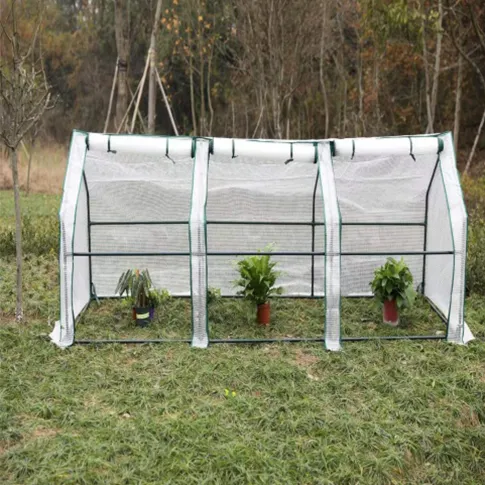
A polytunnel is a tunnel-shaped growing structure made with a curved frame and a flexible plastic or mesh cover to protect plants and extend the growing season. It is widely used by hobby gardeners, allotment growers, nurseries and small-scale vegetable producers because it offers a large protected growing area at a relatively affordable cost. For retailers and distributors, polytunnels are attractive because they are lightweight to ship, easy to assemble and suitable for backyard vegetable gardening. PSO’s Tunnel Greenhouse Hobby Polytunnel uses UV-protected PE mesh covers, heavy-duty galvanized steel frames and roll-up ventilation windows for home and commercial growing applications.
What Is a Polytunnel?
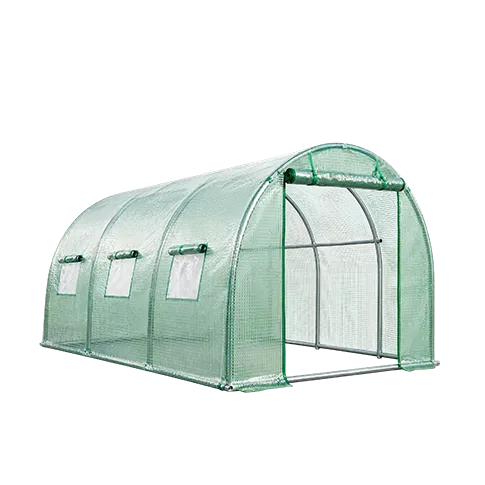
A polytunnel is a walk-in protected growing tunnel that uses a metal frame and plastic cover to create a warmer, more sheltered plant-growing environment. Most polytunnels have a hoop-shaped or arched frame, a PE or polythene cover, roll-up doors, side windows and ground anchoring points. The USDA NRCS guidance for seasonal high tunnel systems defines a high tunnel as a covered structure at least 6 feet high that protects crops from environmental conditions and extends the growing season. It also specifies a minimum 6-mil, greenhouse-grade, UV-resistant polyethylene material when a polyethylene cover is used.
PSO’s tunnel greenhouse specifications include hot-dipped galvanized steel, 18–25 mm tube diameter, 140–180 gsm UV-protected PE mesh cover, 80–85% light transmission and available sizes from 200–800 cm long, 200–300 cm wide and 200–240 cm high.
How Does a Polytunnel Work?
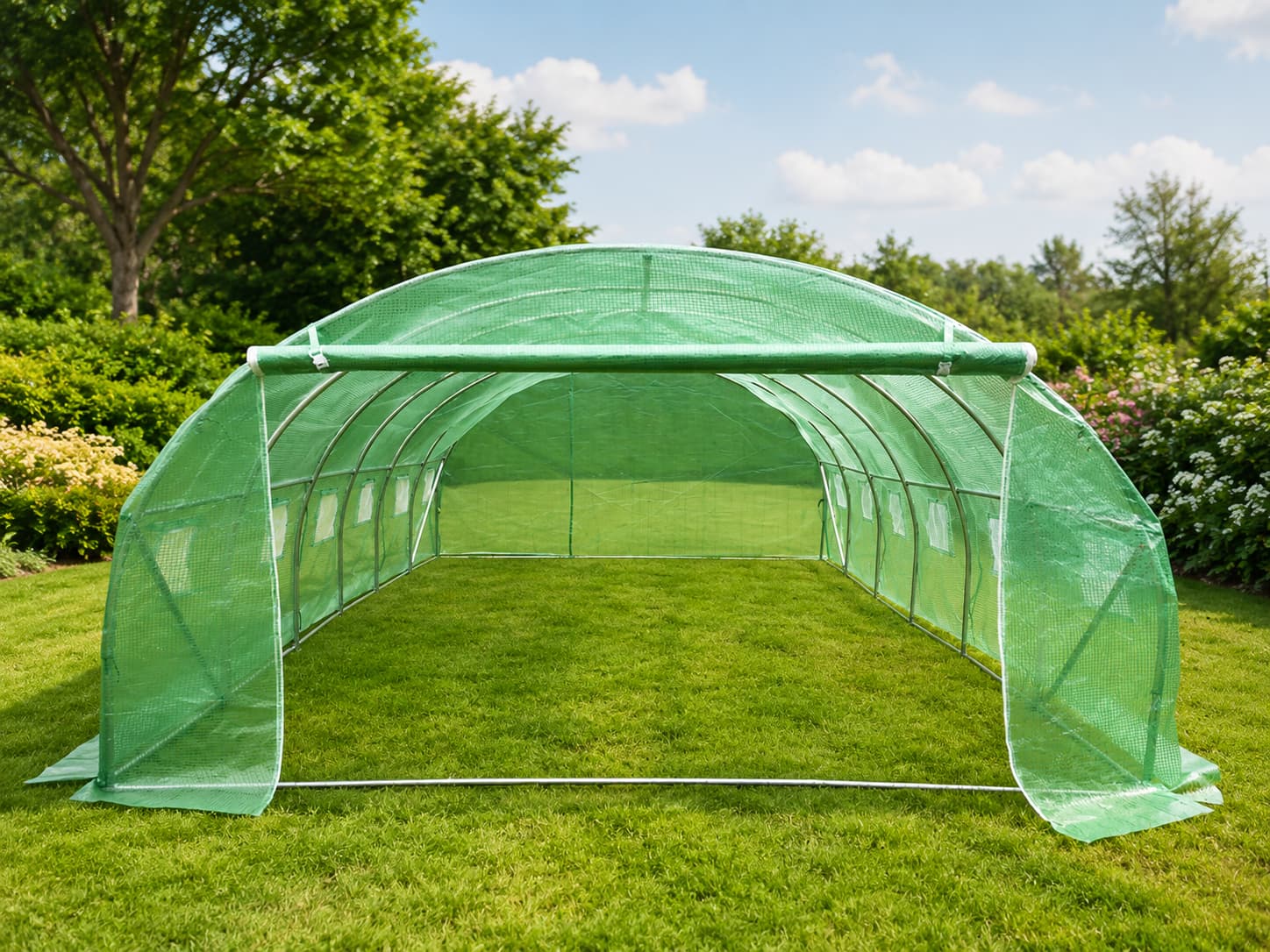
A polytunnel works by trapping solar warmth, reducing wind exposure, controlling rain impact and creating a more stable microclimate around crops.
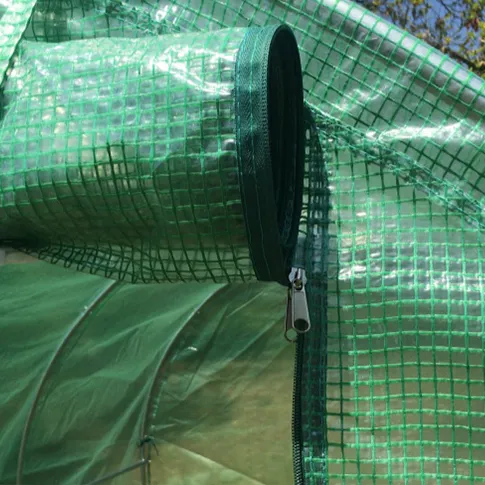
Inside a polytunnel, plants are less exposed to sudden weather changes. The cover helps reduce cold wind, heavy rain and pest pressure, while the arched structure allows rainwater runoff and gives growers enough headroom for watering, pruning and harvesting. Ventilation is important because excessive humidity can lead to condensation and disease risk, especially around tomatoes, cucumbers, peppers and leafy greens. The University of Minnesota Extension guidance on gray mold in tomatoes recommends reducing humidity and leaf wetness by rolling up high-tunnel sides, increasing ventilation and avoiding overhead irrigation.
The RHS notes that polythene tunnels are a highly cost-effective way to grow summer crops such as tomatoes and cucumbers, although they are usually less economical to heat and keep frost-free over winter than smaller rigid greenhouses.
Polytunnel vs Greenhouse: Key Differences
Polytunnel vs greenhouse is mainly a comparison of structure, cost, insulation, appearance, durability and best-use scenario.
| Comparison Item | Polytunnel | Greenhouse |
|---|---|---|
| Main Structure | Arched galvanized steel frame with PE cover | Rigid frame with glass or polycarbonate panels |
| Cost Position | Usually more affordable per growing area | Usually higher initial cost |
| Best Use | Vegetables, seedlings, seasonal crops, soft fruit | Seed starting, ornamentals, potted plants, year-round hobby growing |
| Light | Diffused light through film or mesh | High light through glass or polycarbonate |
| Ventilation | Roll-up doors and side windows | Roof vents, side vents and doors |
| Heating | Less efficient to heat in winter | Easier to heat in a smaller controlled space |
| Appearance | Practical and agricultural | More decorative for patios and backyards |
| Retail Fit | Value, large-space and vegetable-growing buyers | Premium garden and year-round hobby buyers |
For customers who need frost protection in winter, heating strategy matters. According to the RHS guidance on heating greenhouses efficiently, maintaining a frost-free greenhouse temperature of around 4°C can help gardeners overwinter more tender plants and start warm-temperate plants earlier in spring.
How to Choose a Polytunnel for Home or Retail Sales
Choosing a polytunnel means checking frame strength, cover material, light transmission, ventilation, size, anchoring, packaging and after-sales support.
For home gardeners, the most important factors are usable internal space, easy access, stable ventilation and weather resistance. For retailers, the key factors are carton size, assembly instructions, spare parts, replacement covers, MOQ, barcode labeling and warranty terms. PSO’s Garden Greenhouses range includes tunnel, walk-in and mini greenhouse options designed for home gardeners, retail and e-commerce sales. PSO also supports OEM/ODM customization for size, cover material, color, logo, manuals and carton artwork.
Retail buyers can also combine polytunnels with PE Film Greenhouse products and Greenhouse Kits & Accessories to create a complete product range. PSO lists OEM carton MOQ from 500 units, 20ft container lead time of 20–25 days, 40HQ lead time of 30–35 days, and a 2-year warranty for metal frames and PE films.
Conclusion
A polytunnel is a practical protected growing structure for gardeners who want more growing space, better weather protection and a longer growing season without the higher cost of a rigid greenhouse. It is especially suitable for vegetables, seedlings, soft fruit and seasonal hobby growing. For retailers and distributors, polytunnels are a strong category because they are lightweight, affordable, easy to assemble and suitable for online and garden-center sales. PSO’s featured Tunnel Greenhouse Hobby Polytunnel provides galvanized steel frames, UV-protected PE mesh, roll-up ventilation and multiple size options, making it a practical choice for brands building a greenhouse and garden-growing product line.
FAQ
1. What is a polytunnel used for?
A polytunnel is used to protect plants from wind, rain, cold and pests while creating a warmer growing environment for vegetables, seedlings, herbs, flowers and soft fruit.
2. Is a polytunnel the same as a greenhouse?
No. A polytunnel usually uses an arched frame and PE cover, while a greenhouse uses a rigid frame with glass or polycarbonate panels.
3. What crops grow well in a polytunnel?
Tomatoes, cucumbers, peppers, lettuce, spinach, herbs, strawberries and seedlings grow well in polytunnels when ventilation, watering and spacing are managed properly.
4. Is a polytunnel good for winter?
A polytunnel can protect hardy crops in winter, but it is usually less efficient to heat than a smaller rigid greenhouse. It is best used for season extension unless extra insulation or heating is added.
5. What should retailers check before ordering polytunnels?
Retailers should check frame diameter, cover weight, light transmission, size range, carton design, assembly instructions, spare parts, MOQ, warranty and replacement-cover support.
6. Why choose PSO polytunnels?
PSO provides tunnel greenhouses, PE film greenhouses, garden greenhouse accessories and OEM/ODM services for retailers and distributors, with customization options for size, cover material, color, logo, manuals and packaging.